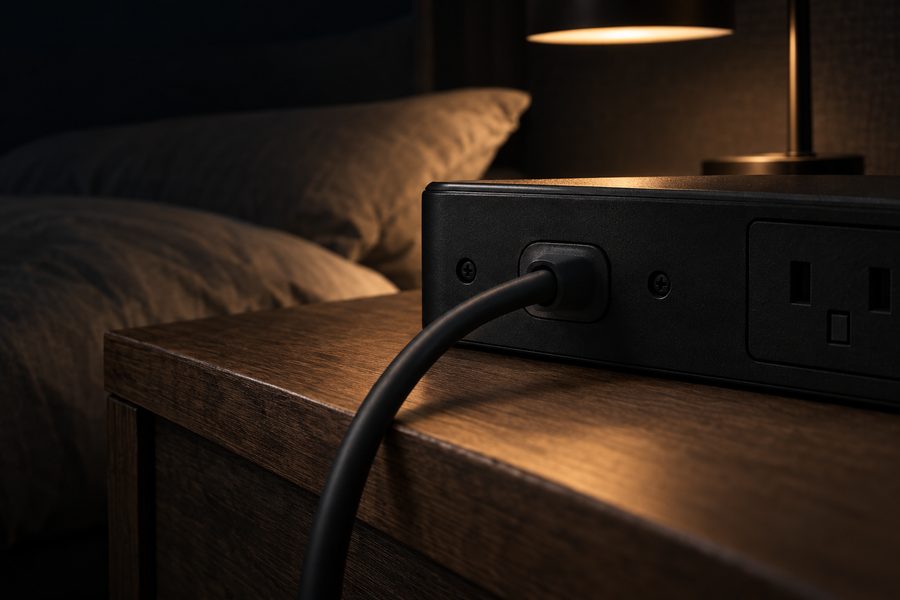
It may be possible, but the safest approach is to follow the nightstand manufacturer's instructions and use a permanent wall outlet whenever practical.
Extension cords are designed for specific loads and situations, and not every cord is appropriate for every electrical device.
Why people use extension cords with nightstands
Bedroom outlets are not always conveniently placed.
The closest socket may be:
- Behind the bed
- Across the room
- Blocked by furniture
- Already in use
A charging nightstand may therefore sit farther from the wall outlet than its supplied cable can comfortably reach.
Check the manufacturer's instructions
Before adding an extension cord, look at the manual or safety instructions included with the furniture.
If the manufacturer tells you not to use an extension cord, follow that guidance.
Don't hide a cord where it can be damaged
Avoid routing extension cords:
- Under mattresses
- Under rugs
- Through doorways
- Where furniture crushes them
- Where people regularly walk over them
Physical damage is a bigger concern than simply making the cord look untidy.
Avoid daisy-chaining
Connecting an extension cord to another extension cord or stacking multiple power strips is generally something to avoid.
If you repeatedly need extra reach, improving the permanent outlet arrangement may be the better solution.
Think about what you're plugging into the nightstand
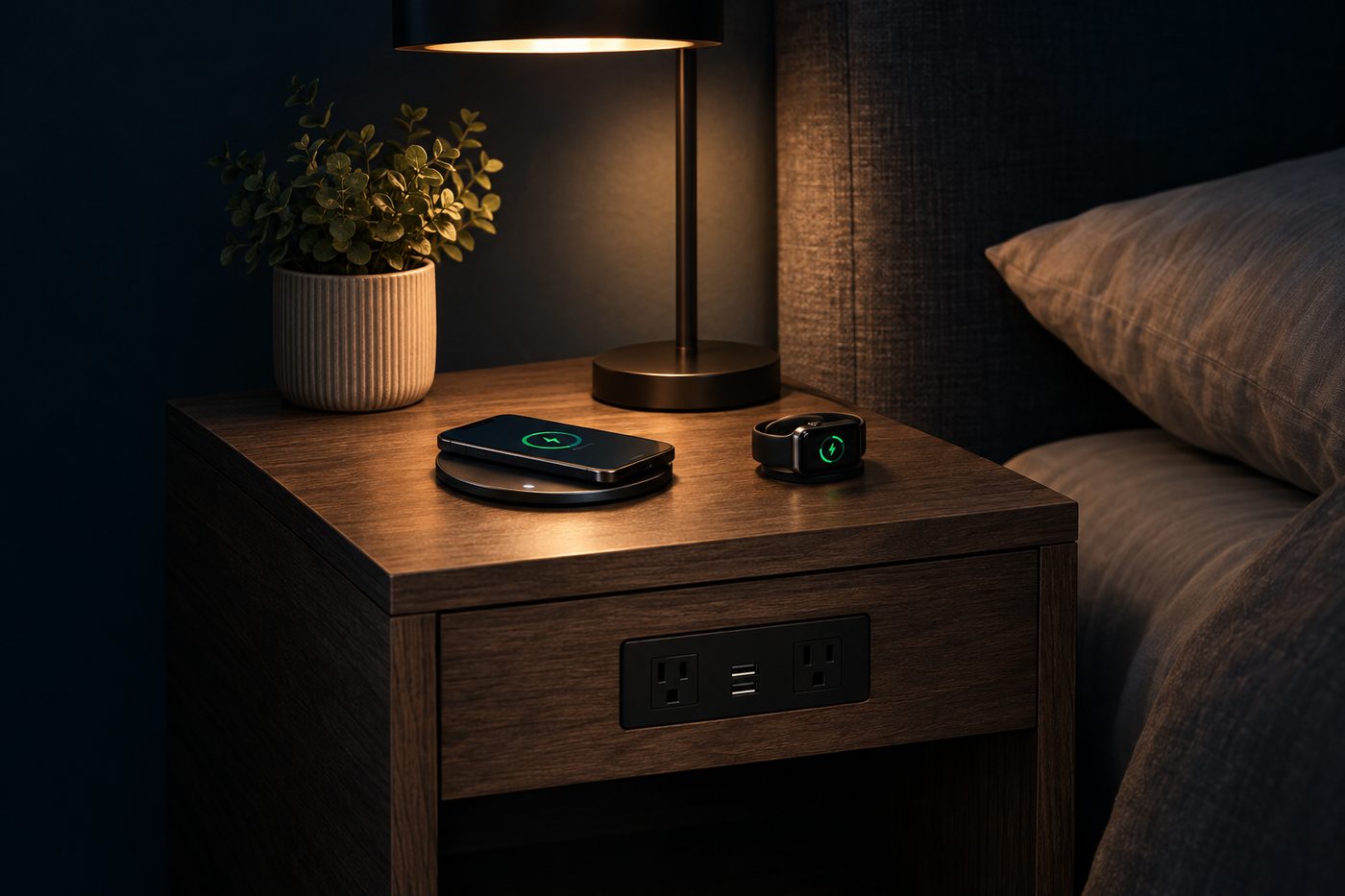
A powered nightstand may be supplying several devices at once.
That could include:
- A phone
- A lamp
- A tablet
- A watch charger
- Other electronics
You should stay within the electrical ratings provided for both the nightstand and any extension equipment being used.
A longer power cord can be a useful buying feature
If you have not bought your nightstand yet, check the supplied cord length.
A charging nightstand that works with your bedroom layout may prevent the need for an extension cord altogether.
Bottom line
Do not assume every extension cord is appropriate simply because the plug fits.
Follow the furniture manufacturer's instructions, keep cords visible and protected from damage, and avoid overloading or daisy-chaining electrical equipment.
When in doubt about a permanent electrical setup, consult a qualified electrician.