If you are buying a new charging nightstand, USB-C is usually the better port to prioritize, especially if you plan to keep the furniture for several years.
USB-A is still useful for older cables and accessories, but USB-C supports newer devices and can support substantially higher charging power when USB Power Delivery is implemented.
The ideal setup for many bedrooms is actually a nightstand containing both.
What is USB-A?
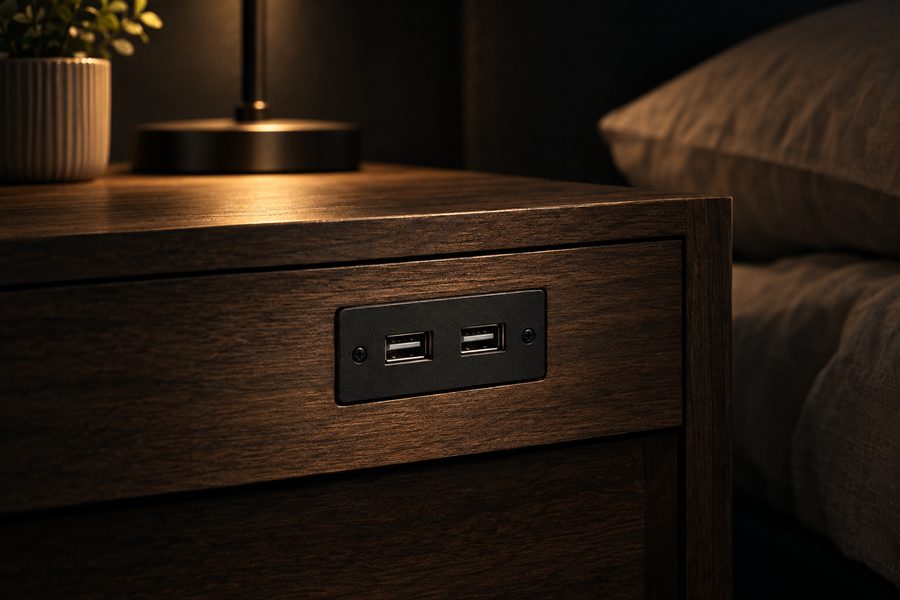
USB-A is the familiar rectangular USB connection that has been used for years.
You probably already own several USB-A cables.
It remains useful for:
- Older smartphones
- Smartwatches
- Headphones
- Small bedside electronics
- Legacy charging cables
The biggest advantage is compatibility with equipment you already own.
What is USB-C?
USB-C uses the smaller reversible connector now found on many modern smartphones, tablets, laptops, headphones, and other electronics.
You can insert the connector either way, and USB-C can support USB Power Delivery.
USB Power Delivery itself can support very high power levels, although the actual charging output of a nightstand will depend on the charging module installed in it.
In other words, the presence of a USB-C-shaped port does not automatically mean you are getting fast charging.
Which charges faster?
It depends on the specifications.
A properly implemented USB-C PD port can provide much faster charging than a basic USB-A port.
But you need to look at the actual wattage.
For example, a USB-C port labeled 20W is much more informative than a product listing that simply says "USB-C charging."
When browsing nightstands with modern USB-C charging, check the product specifications rather than judging the charging system only by the shape of the port.
USB-C is more future-friendly
Furniture usually lasts longer than phone chargers.
That is one reason USB-C matters.
You may replace your phone several times while keeping the same nightstand.
A bedside table that only has older USB-A ports could feel dated sooner than one containing USB-C.
Is USB-A still worth having?
Absolutely.
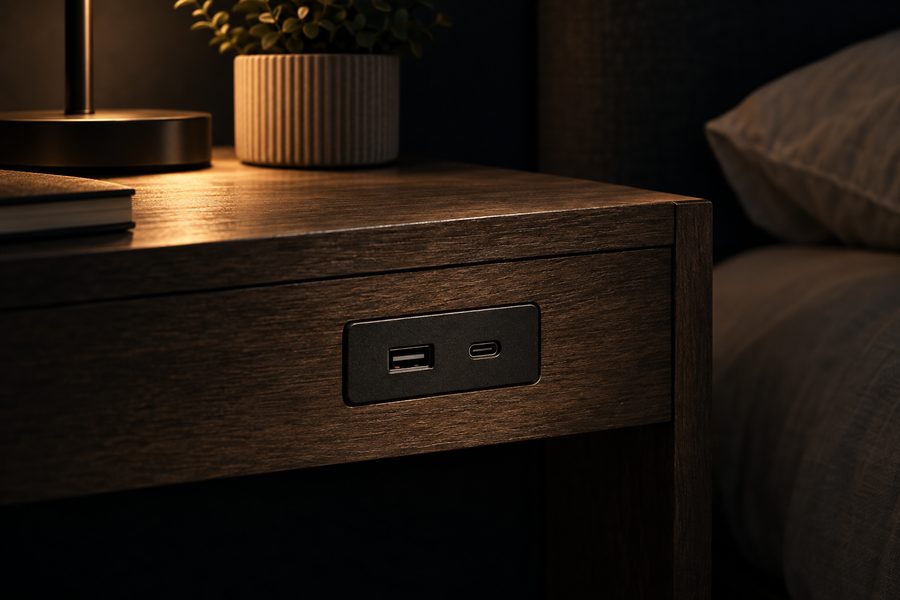
A combination of USB-C and USB-A is especially practical.
You can use USB-C for your phone while keeping USB-A available for an older watch cable, lamp, headphones, or another accessory.
Best setup for most people
For a new purchase, I would look for:
- At least one USB-C port
- At least one USB-A port
- Clearly stated charging output
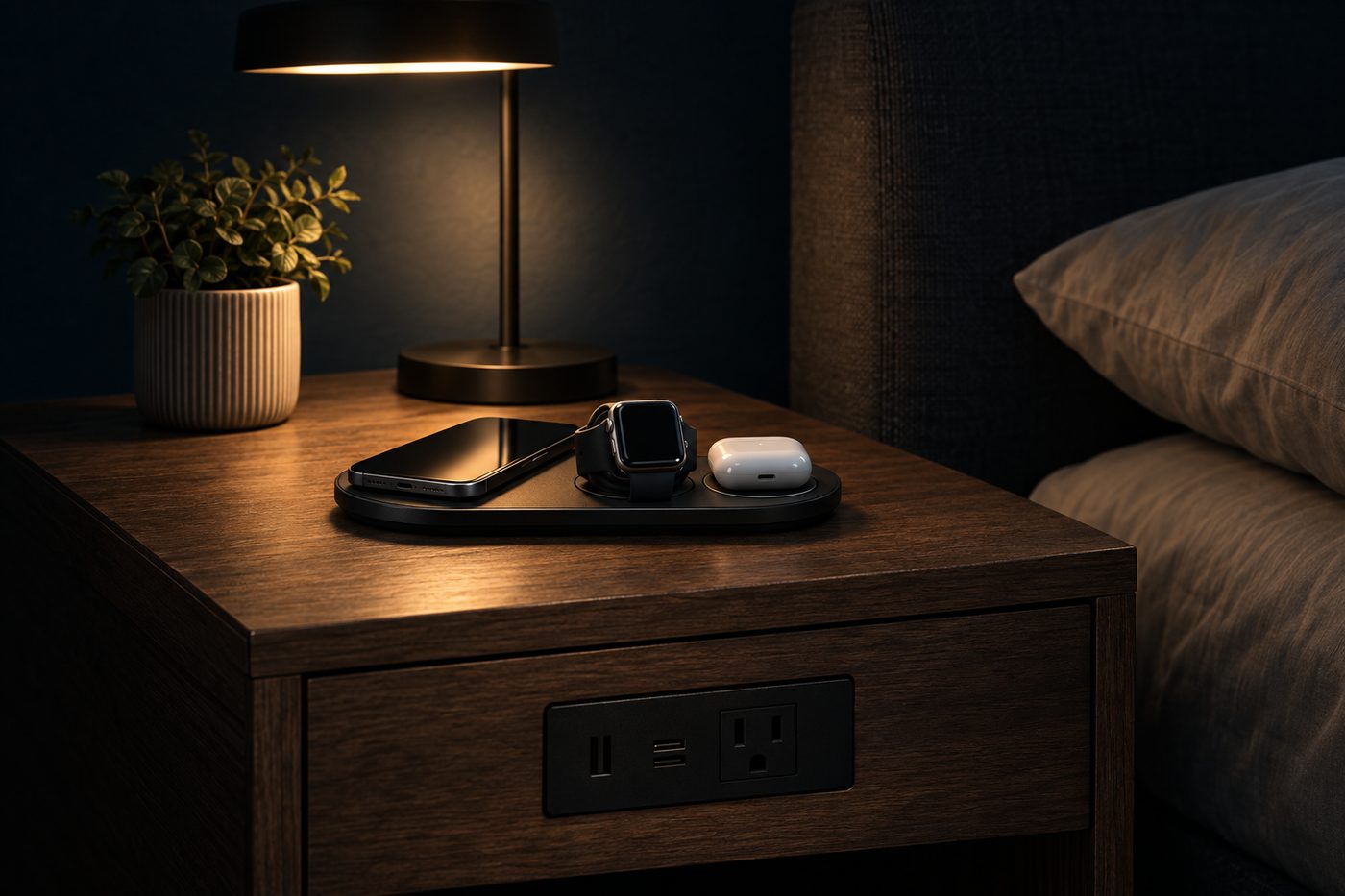
- One or more AC outlets
- Good access to the ports
That combination gives you flexibility without requiring adapters.
A charging nightstand with both USB-C and USB-A ports is particularly useful when two people or several devices regularly need charging beside the bed.
Bottom line
USB-A remains useful, but USB-C is the connection worth prioritizing when buying a charging nightstand today.
Ideally, choose both.
That gives you compatibility with older accessories while making the nightstand better prepared for newer phones and electronics.