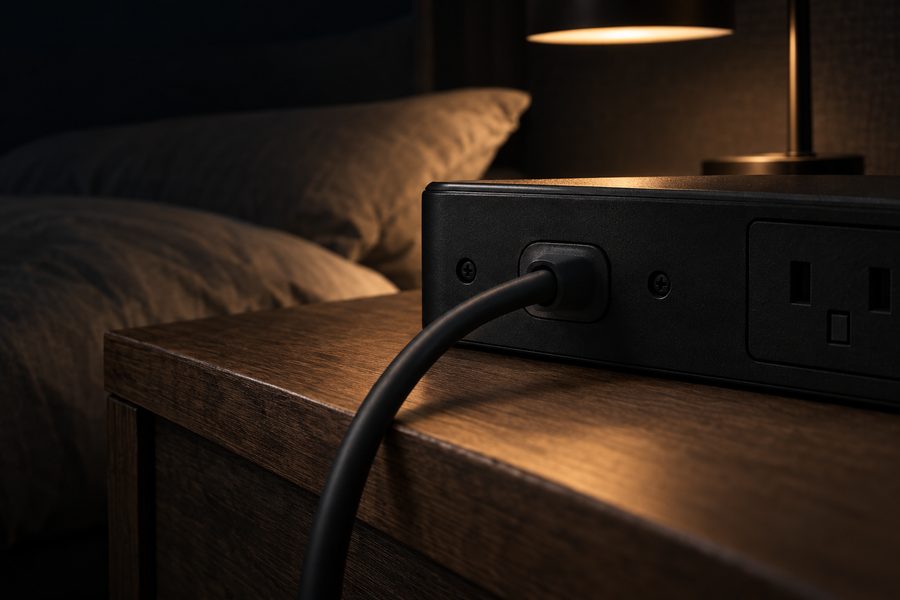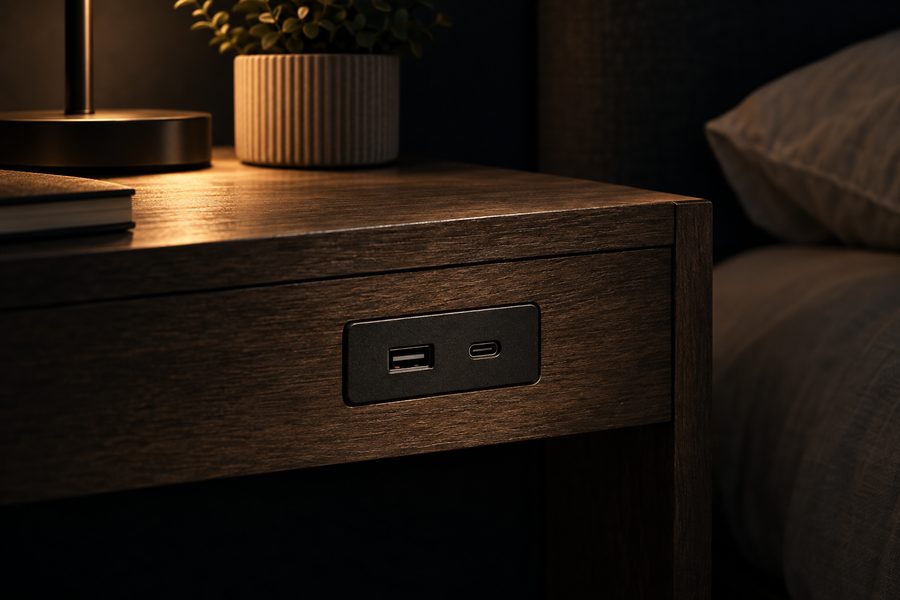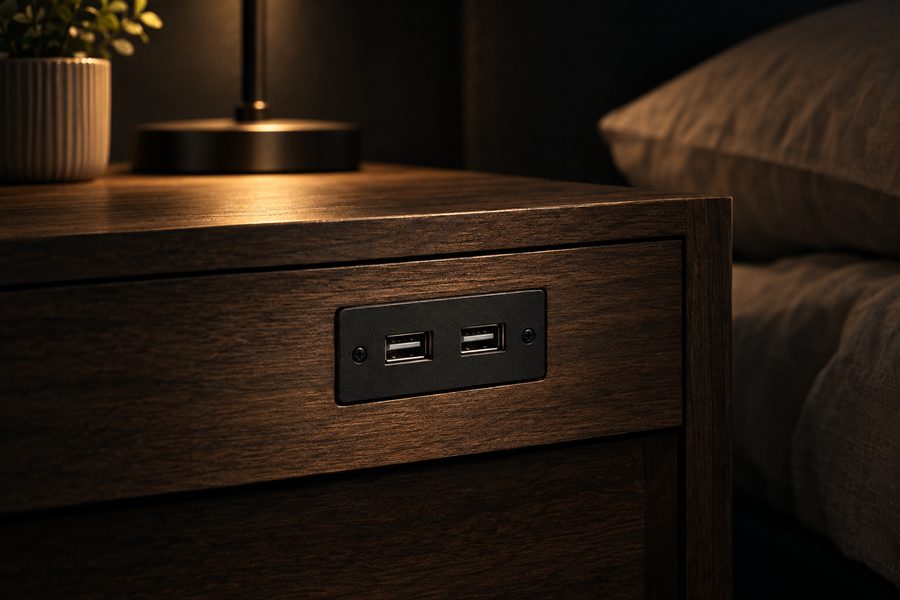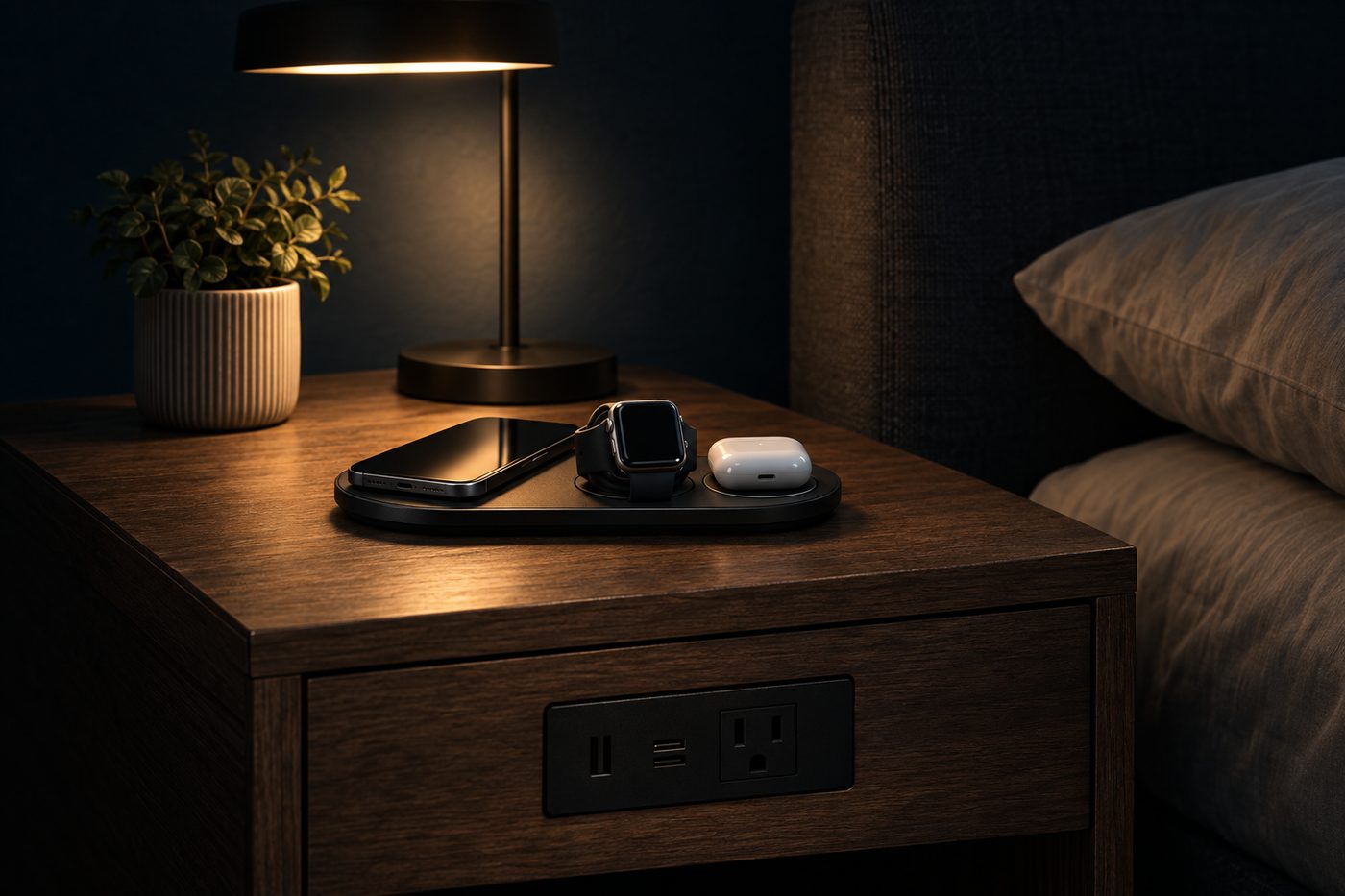
Sometimes, but not every USB-C port built into a nightstand provides enough power for a laptop.
The deciding factors are:
- The nightstand's USB-C output
- Whether it supports USB Power Delivery
- Your laptop's charging requirements
- The cable you use
USB-C does not automatically mean laptop charging
This is the biggest misconception.
USB-C is a connector.
Two USB-C ports that look identical may provide very different amounts of power.
A low-output port designed mainly for smartphones may technically connect to your laptop but charge extremely slowly or not charge it at all.
Check the wattage
Look at your laptop's charger.
If the original adapter is 65W, for example, a 15W bedside USB-C port is unlikely to be a useful replacement.
Some laptops can accept lower power while sleeping but may still lose battery while being actively used.
Look for USB Power Delivery
USB Power Delivery, often shortened to USB PD, allows compatible USB-C devices and chargers to negotiate power requirements.
The USB PD standard supports power levels well beyond what most nightstands need, but the furniture's built-in module still determines the actual output available.
Your cable matters too
Do not forget the cable.
For higher-power charging, you need a USB-C cable designed for the required amount of power.
A cheap cable can become the weak link even when both the laptop and charging port are capable of higher output.
An AC outlet is often the better option
If your nightstand's USB-C output is insufficient, a built-in AC outlet solves the problem.
Plug the laptop's normal power adapter into the nightstand instead.
This is one reason a nightstand with USB-C ports and built-in AC outlets is more versatile than a model relying entirely on USB charging.
What should laptop users buy?
If laptop charging matters to you, check for:
- USB-C PD
- Explicit wattage
- 45W, 65W, or another suitable output
- AC outlets as a backup
- Enough surface area for your equipment
A bedside table with higher-power USB-C charging can reduce the number of charging bricks around your bed, but only if its specifications genuinely match your computer.
Final answer
Yes, you can charge some laptops from a nightstand's USB-C port.
But the USB-C connector alone tells you very little.
Compare the port's wattage and USB PD capabilities with your laptop's requirements before assuming it can replace your regular charger.