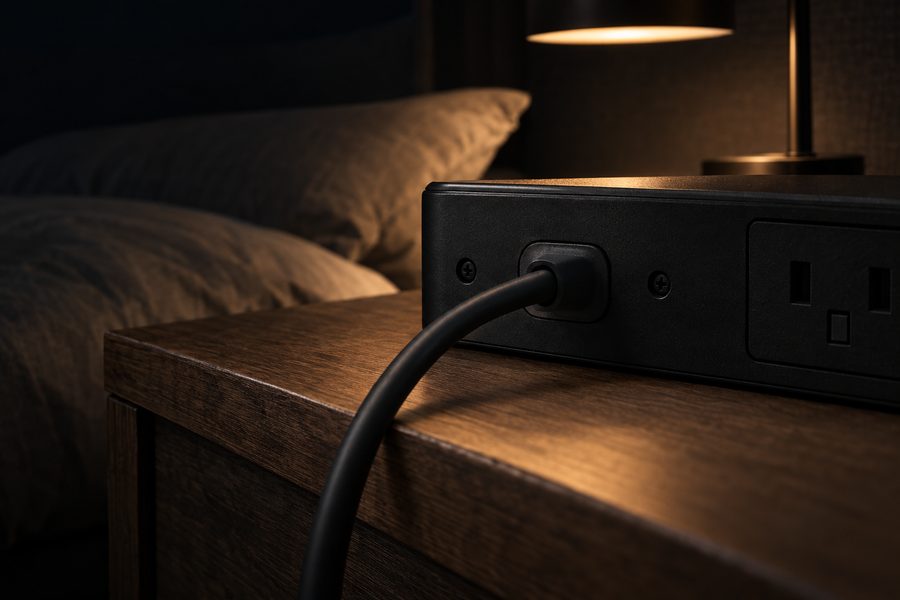
A charging nightstand runs mains voltage into a wooden case a few inches from bedding. The risk is low and the checks are quick, and they are worth doing because this category includes a lot of very cheap imports.
The mark to look for is on the power module, not the furniture
The wooden part of a nightstand is not electrically certified and does not need to be. The power module is, and that is where the mark lives.
In the United States, look for UL or ETL listing on the module or its label. In the United Kingdom and Europe, look for UKCA or CE alongside a named manufacturer. A mark printed only on the cardboard box and nowhere on the part itself tells you nothing.
A missing or vague mark is the signal to walk away
Listings that describe a product as certified without naming a scheme, or that show a mark only in a marketing graphic, are the ones to avoid. The mark is cheap to print and expensive to earn, so the absence of a specific scheme name on the part is meaningful.
Check the cord where it enters the case
The most common visible fault on arrival is the strain relief where the power cord passes into the furniture. There should be a grommet or a moulded collar holding the cable so pulling the stand does not pull on the internal connection.
A cord passing through a bare drilled hole in chipboard will chafe.
Give it air
Power modules get warm, and a module buried in a closed drawer cavity packed with clothes stays warm. Keep the space around the module clear, and do not store anything soft directly against it.
This matters more with a wireless pad, which produces more heat than the ports.
What to do on arrival
- Find the certification mark on the module itself and read the scheme name.
- Check the strain relief where the cord enters the case.
- Plug the stand in with nothing connected and feel the module after an hour. It should be warm at most.
- Load every port at once for one night and check nothing gets hot.
If anything fails these, return it rather than working around it. This is the one part of a nightstand where a fault is worth more than the price of the furniture.